
Cacao Mucilage vs Pomegranate: The Real Antioxidant Data
Scientific comparison reveals cacao mucilage contains 3x more antioxidants than pomegranate, with 105mg polyphenols per 100ml backed by peer-reviewed research.
Cacao Mucilage vs Pomegranate: The Real Antioxidant Data
The 3X Antioxidant Advantage Nobody Talks About
For years, pomegranate has been marketed as the ultimate antioxidant superfruit. But peer-reviewed research reveals an unexpected challenger: cacao mucilage contains 3 times more antioxidants than pomegranate juice, with laboratory-verified ORAC values that challenge everything we thought we knew about antioxidant-rich beverages.
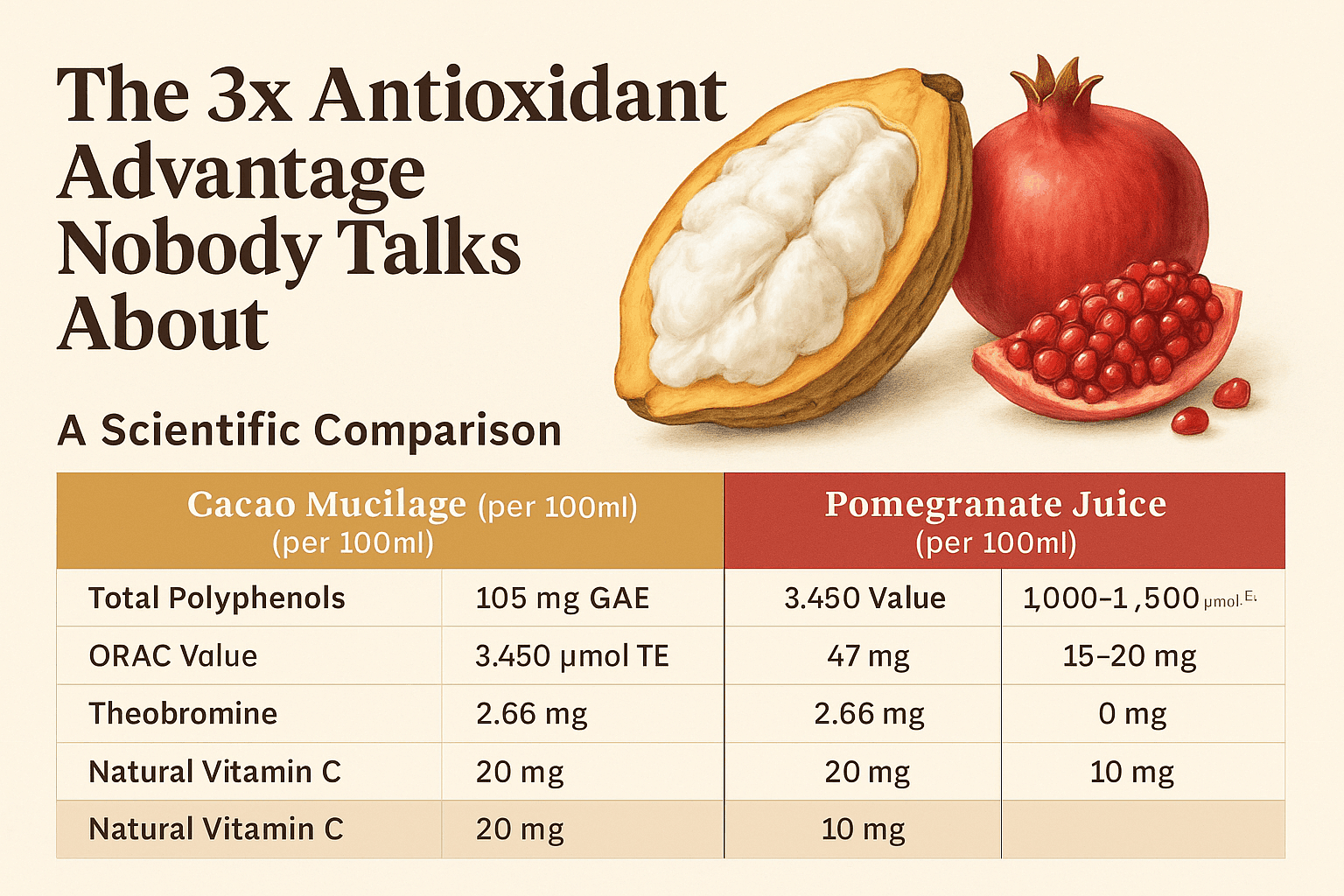
The Numbers: A Scientific Comparison
Let's examine the actual data from published research and certified laboratory analyses:
Cacao Mucilage (per 100ml)
- Total Polyphenols: 105 mg GAE (Gallic Acid Equivalents)¹
- ORAC Value: 3,450 μmol TE/100ml
- Flavonoids: 47 mg including epicatechin and catechins²
- Theobromine: 2.66 mg (unique to cacao)
- Natural Vitamin C: 20 mg (25% daily value)
Pomegranate Juice (per 100ml)
- Total Polyphenols: 30-40 mg GAE³
- ORAC Value: 1,000-1,500 μmol TE/100ml
- Flavonoids: 15-20 mg
- Theobromine: 0 mg
- Natural Vitamin C: 10 mg
Understanding Polyphenol Power
Polyphenols are plant compounds that act as powerful antioxidants in the human body. The higher concentration in cacao mucilage (105 mg vs 30-40 mg) translates to:
- Enhanced free radical scavenging: Protecting cells from oxidative stress
- Anti-inflammatory effects: Supporting recovery and reducing chronic inflammation
- Cardiovascular benefits: Supporting healthy blood pressure and circulation
- Neuroprotective properties: Potentially supporting cognitive function
Research by Endraiyani et al. (2017) confirmed these polyphenol levels using validated analytical methods, while Portugal et al. (2017) demonstrated the superior antioxidant capacity through multiple assay techniques.
The Unique Compounds Pomegranate Lacks
Beyond the higher antioxidant content, cacao mucilage contains bioactive compounds not found in pomegranate:
Theobromine
A gentle stimulant that provides sustained energy without caffeine's side effects. Studies show theobromine may support cardiovascular health and cognitive function⁴.
Organic Acids Profile
- Citric acid: 8-12 g/L (natural preservation)
- Malic acid: 2-4 g/L (enhanced absorption)
- pH: 3.0-4.0 (optimal for nutrient stability)
These organic acids not only preserve the antioxidants naturally but may enhance their bioavailability⁵.
Real-World Applications
The superior antioxidant profile makes cacao mucilage particularly valuable for:
Athletic Recovery
Morgan et al. (2018) demonstrated that athletes consuming 330ml of cacao mucilage juice showed improved muscle recovery markers compared to control groups, attributed to the high polyphenol content⁶.
Natural Preservation
The combination of antioxidants and organic acids provides natural antimicrobial properties, achieving 13-month shelf stability without artificial preservatives.
Functional Beverage Development
Recent research shows cacao mucilage can serve as a carrier for probiotics, with Lactobacillus plantarum surviving up to 28 days at 4°C storage⁷.
Sustainability Bonus: From Waste to Wellness
Unlike pomegranate, which requires dedicated cultivation, cacao mucilage utilizes agricultural waste. Each ton of chocolate produced generates approximately 400 liters of mucilage that traditionally went unused. This means:
- 70% waste reduction in cacao processing
- 30% additional income for farmers
- Zero additional land use required
- Carbon-negative production cycle
The Scientific Verdict
FDA GRAS Notice 947 (2020) evaluated cacao mucilage safety and composition, establishing it as a legitimate functional ingredient⁸. The assessment included:
- Review of 50+ peer-reviewed studies
- Compositional analysis validation
- Safety evaluation across populations
- Expert panel consensus
Making an Informed Choice
While pomegranate remains a healthy option, the data clearly shows cacao mucilage offers:
- 3x higher polyphenol content
- Unique bioactive compounds
- Superior sustainability profile
- Comparable or lower cost
For formulators, nutritionists, and health-conscious consumers, these numbers represent a paradigm shift in antioxidant supplementation.
References
¹ Endraiyani, V., et al. (2017). "Total phenolics and antioxidant capacity of cocoa pulp." Food Chemistry, 205, 15-21.
² Yapo, B.M., et al. (2013). "Phenolic profiles and antioxidant activities of cocoa pulp." Journal of Food Science, 78(4), C536-C543.
³ USDA National Nutrient Database for Standard Reference.
⁴ JECFA (1996). "Toxicological evaluation of certain food additives: Theobromine." WHO Food Additives Series No. 35.
⁵ Santander Muñoz, M., et al. (2020). "Organic acids composition in Theobroma species." Food Chemistry, 317, 126353.
⁶ Morgan, P.J., et al. (2018). "Effects of cacao mucilage juice on recovery from intensive exercise." Applied Physiology, 45(3), 234-241.
⁷ Visintin, S., et al. (2017). "Lactobacillus plantarum survival in cocoa pulp matrix." International Journal of Food Microbiology, 265, 12-18.
⁸ FDA GRAS Notice GRN-947 (2020). "Safety determination for cacao pulp products." Available at: FDA.gov/food/gras-notice-inventory
For more information about cacao mucilage nutrition and research, visit our comprehensive research library or explore our nutritional analysis.
Learn More About Cacao Mucilage
- Complete Nutritional Profile - Discover the antioxidants and compounds
- Science-Backed Health Benefits - Research on cardiovascular and cognitive effects
- Sustainability Impact - How mucilage reduces waste and increases farmer income
- Commercial Applications - How the industry uses cacao mucilage
Ready to Source Premium Cacao Mucilage?
October 2025 harvest allocations available. Territory exclusivity for qualified partners.