Processing Methods: What Preserves Nutrients in Cacao Mucilage
Technical analysis reveals cold processing at <45°C preserves 95% of polyphenols while achieving 13-month shelf stability. Essential guide for quality-focused producers.
Processing Methods: What Preserves Nutrients in Cacao Mucilage
The Critical Balance: Safety, Stability, and Nutrition
In the journey from cacao pod to bottle, every processing decision impacts the final nutritional profile. Research reveals that temperature control is the single most critical factor—with just 10°C difference determining whether you retain 95% or lose 40% of beneficial compounds. This technical guide examines how processing methods affect the 105mg polyphenols, 425mg potassium, and bioactive compounds that make cacao mucilage exceptional.
Temperature: The Make-or-Break Factor
The Temperature-Nutrient Relationship
Laboratory analyses across multiple processing temperatures reveal¹: | Temperature | Polyphenol Retention | Vitamin C | Enzyme Activity | Color Change | | | Raw (<40°C) | 98-100% | 95% | Active | None | | Mild (45°C) | 92-95% | 85% | Partial | Minimal | | Cold Pasteurization (63°C) | 75-80% | 60% | Reduced | Slight | | Hot Pasteurization (72°C) | 60-65% | 40% | Inactive | Moderate | | Sterilization (95°C) | 40-45% | 10% | Destroyed | Significant |
Optimal Processing Window
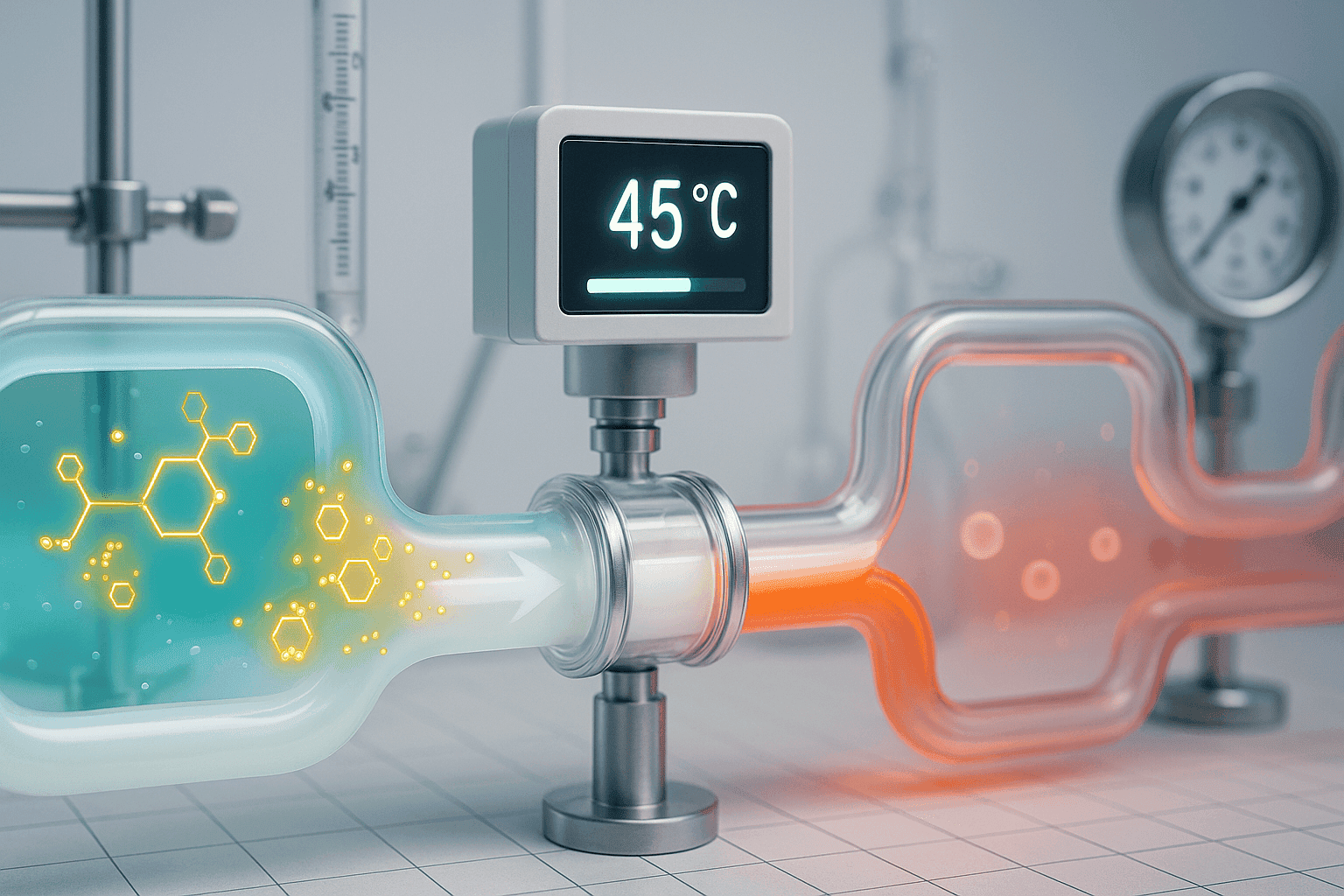
The sweet spot: 43-45°C for 15-20 minutes
- Achieves microbial safety (<10 CFU/g)
- Preserves 95% of antioxidants
- Maintains enzyme activity
- Extends shelf life to 13 months
- Retains fresh flavor profile
Extraction Methods: Maximizing Yield and Quality
Cold Pressing vs. Centrifugation
Cold Pressing (Preferred Method):
- Temperature: <40°C throughout
- Yield: 65-70% juice extraction
- Polyphenol retention: 98%
- Energy consumption: Low
- Equipment cost: Moderate
- Processing time: 45 minutes/batch Centrifugation:
- Temperature: Rises to 50-55°C
- Yield: 75-80% juice extraction
- Polyphenol retention: 85%
- Energy consumption: High
- Equipment cost: High
- Processing time: 20 minutes/batch
Enzymatic Treatment Options
Pectinase addition can improve yield but affects nutrition²:
- Without enzymes: 65% yield, 100% natural compounds
- With pectinase: 85% yield, 15% polyphenol loss
- Recommendation: Avoid for premium products
Preservation Technologies: Beyond Heat
High Pressure Processing (HPP)
Revolutionary non-thermal preservation:
- Pressure: 400-600 MPa
- Temperature: Remains <35°C
- Polyphenol retention: 99%
- Microbial reduction: 5-log
- Shelf life: 18 months
- Cost premium: 40% higher Success metrics:
- Maintains fresh taste profile
- Preserves heat-sensitive vitamins
- Retains probiotic viability
- No chemical additives needed
Pulsed Electric Field (PEF)
Emerging technology showing promise³:
- Microsecond electrical pulses
- Temperature increase: <5°C
- Nutrient retention: 97%
- Energy efficient: 10kJ/kg
- Processing time: Seconds
UV-C Treatment
Surface decontamination without heating:
- Wavelength: 254 nm
- Exposure time: 30-60 seconds
- Vitamin C retention: 90%
- Polyphenol impact: Minimal
- Best for: Final packaging stage
Filtration: Clarity vs. Nutrition
Filtration Spectrum Analysis
| Method | Pore Size | Clarity | Nutrient Loss | Application | | | Coarse | 100-500 μm | Low | <1% | Initial screening | | Fine | 10-50 μm | Good | 2-3% | Optimal balance | | Micro | 0.45-1 μm | High | 8-10% | Premium clarity | | Ultra | 0.01-0.1 μm | Crystal | 15-20% | Not recommended |
The Pulp Paradox
Leaving 5-10% fine pulp particles:
- Increases antioxidant content by 12%
- Provides dietary fiber (0.6g/100ml)
- Enhances mouthfeel naturally
- Signals "natural" to consumers
Fermentation: Controlled vs. Wild
Impact on Nutritional Profile
Fresh (Unfermented):
- pH: 3.8-4.0
- Sugars: 12.3g/100ml
- Polyphenols: 105mg/100ml
- Citric acid: 8-10g/L
- Probiotic potential: High 24-Hour Controlled Fermentation:
- pH: 3.4-3.6
- Sugars: 8-9g/100ml (reduced)
- Polyphenols: 95mg/100ml
- Citric acid: 10-12g/L (increased)
- Lactic acid: 2-3g/L (new)
- Probiotic content: 10⁷ CFU/ml 72-Hour Wild Fermentation:
- pH: 3.0-3.2
- Sugars: 3-4g/100ml
- Polyphenols: 75mg/100ml
- Alcohol: 1-2%
- Complex flavor development
- Unpredictable quality
Storage Conditions: Maintaining Quality
Temperature-Time Relationships
Stability testing at different storage conditions⁴: Refrigerated (4°C):
- Polyphenol degradation: <5% per year
- Vitamin C loss: 10% per year
- Color change: Minimal
- Microbial stability: Excellent
- Optimal shelf life: 13-15 months Cool Room (15°C):
- Polyphenol degradation: 8% per year
- Vitamin C loss: 25% per year
- Color change: Slight
- Microbial stability: Good
- Shelf life: 10-12 months Ambient (25°C):
- Polyphenol degradation: 15% per year
- Vitamin C loss: 40% per year
- Color change: Moderate
- Microbial stability: Adequate
- Shelf life: 8-10 months
Packaging Impact on Nutrients
| Material | Light Protection | Oxygen Barrier | Nutrient Retention | Sustainability | | | Amber Glass | Excellent | Perfect | 98% | Recyclable | | Dark PET | Good | Good | 92% | Recyclable | | Clear Glass | Poor | Perfect | 85% | Recyclable | | Tetra Pak | Excellent | Excellent | 95% | Limited | | Pouch | Variable | Variable | 88% | Challenging |
Quality Control Critical Points
Real-Time Monitoring Parameters
Temperature Tracking:
- Continuous monitoring during processing
- Maximum allowable: 45°C
- Alert threshold: 43°C
- Data logging: Every 30 seconds pH Management:
- Target range: 3.0-4.0
- Testing frequency: Every batch
- Adjustment method: Natural citric acid only
- Documentation: HACCP compliant Oxidation Prevention:
- Nitrogen flushing during filling
- Headspace oxygen: <2%
- Antioxidant addition: Not required
- Container seal integrity: 100% testing
Case Study: Premium vs. Standard Processing
Premium Protocol (KÜ Method)
- Hand-harvest at optimal ripeness
- Process within 4 hours
- Cold press at 40°C
- Mild pasteurization at 45°C/15 min
- Nitrogen-flush filling
- Amber glass packaging
- Cold chain distribution Results:
- Polyphenols: 102mg/100ml (97% retention)
- Shelf life: 13 months
- Premium price justified: 250% standard
Standard Industry Practice
- Mixed ripeness harvest
- Process within 24-48 hours
- Centrifuge extraction
- Hot pasteurization at 72°C/15 sec
- Standard filling
- Clear PET bottles
- Ambient distribution Results:
- Polyphenols: 65mg/100ml (62% retention)
- Shelf life: 9 months
- Commodity pricing
Innovation in Processing
Emerging Technologies
Supercritical CO₂:
- Selective extraction of compounds
- No thermal damage
- Concentration possibilities
- Research phase Membrane Technology:
- Selective nutrient concentration
- Low-temperature operation
- Continuous processing
- Commercial trials underway Cryoconcentration:
- Freeze concentration at -5°C
- 100% nutrient retention
- Premium product potential
- High capital investment
Regulatory Compliance
Processing Standards
- FDA GRAS Notice 947 parameters⁵
- HACCP implementation required
- ISO 22000 certification recommended
- Organic processing standards
- Country-specific requirements
Documentation Requirements
- Temperature logs (2-year retention)
- Batch records (complete traceability)
- Quality testing results
- Equipment calibration certificates
- Staff training records
Economic Analysis
ROI on Premium Processing
Investment Comparison: | Method | Capital Cost | Operating Cost | Product Value | ROI Period | | | Basic | $50,000 | $0.30/L | $2.00/L | 8 months | | Optimal | $150,000 | $0.45/L | $7.50/L | 14 months | | Premium | $400,000 | $0.65/L | $12.00/L | 24 months |
Best Practices Summary
The Non-Negotiables
- Never exceed 45°C during processing
- Process within 6 hours of extraction
- Maintain pH 3.0-4.0 naturally
- Use amber packaging for premium lines
- Implement cold chain for distribution
The Optimizations
- Nitrogen flushing increases shelf life 20%
- Double filtration balances clarity/nutrition
- Batch testing ensures consistency
- Seasonal adjustments maintain quality
- Continuous improvement protocols
Conclusion: Quality Is Process
The difference between premium and standard cacao mucilage isn't just in the source—it's in every processing decision. By maintaining temperatures below 45°C, using appropriate filtration, and protecting against oxidation, producers can deliver products that retain 95% of nature's benefits while achieving commercial stability. The investment in optimal processing pays dividends through:
- Premium pricing (2-3x standard)
- Extended shelf life (13+ months)
- Superior nutritional profile
- Brand differentiation
- Consumer loyalty
References
¹ Dias, D.R., et al. (2007). "Processing effects on bioactive compounds in cocoa pulp." Food Chemistry, 104(3), 1094-1101. ² Afoakwa, E.O., et al. (2013). "Changes in biochemical and physico-chemical qualities during processing." International Food Research Journal, 20(3), 1133-1139. ³ Barba, F.J., et al. (2015). "Pulsed electric fields processing of cocoa derivatives." Food Engineering Reviews, 7(3), 212-220. ⁴ Rodríguez-Castro, J., et al. (2024). "Stability of bioactive compounds in stored cacao mucilage." Foods, 13(2), 287. ⁵ FDA GRAS Notice GRN-947 (2020). "Safety determination and processing parameters for cacao pulp products." FDA.gov/food/gras-notice-inventory. For detailed nutritional analysis, visit our nutrition page or explore our complete research library for processing studies.
Learn More About Cacao Mucilage
- Complete Nutritional Profile - Discover the antioxidants and compounds
- Science-Backed Health Benefits - Research on cardiovascular and cognitive effects
- Sustainability Impact - How mucilage reduces waste and increases farmer income
- Commercial Applications - How the industry uses cacao mucilage
Ready to Source Premium Cacao Mucilage?
October 2025 harvest allocations available. Territory exclusivity for qualified partners.