
What Is That White Juice at Colombian Hotels? It's Cacao Mucilage
What Is That White Juice at Colombian Hotels? It's Cacao Mucilage
A pale, slightly sweet welcome drink at a Colombian hotel, and the questions it makes you ask: what is it, where does it come from, and does it taste like chocolate?
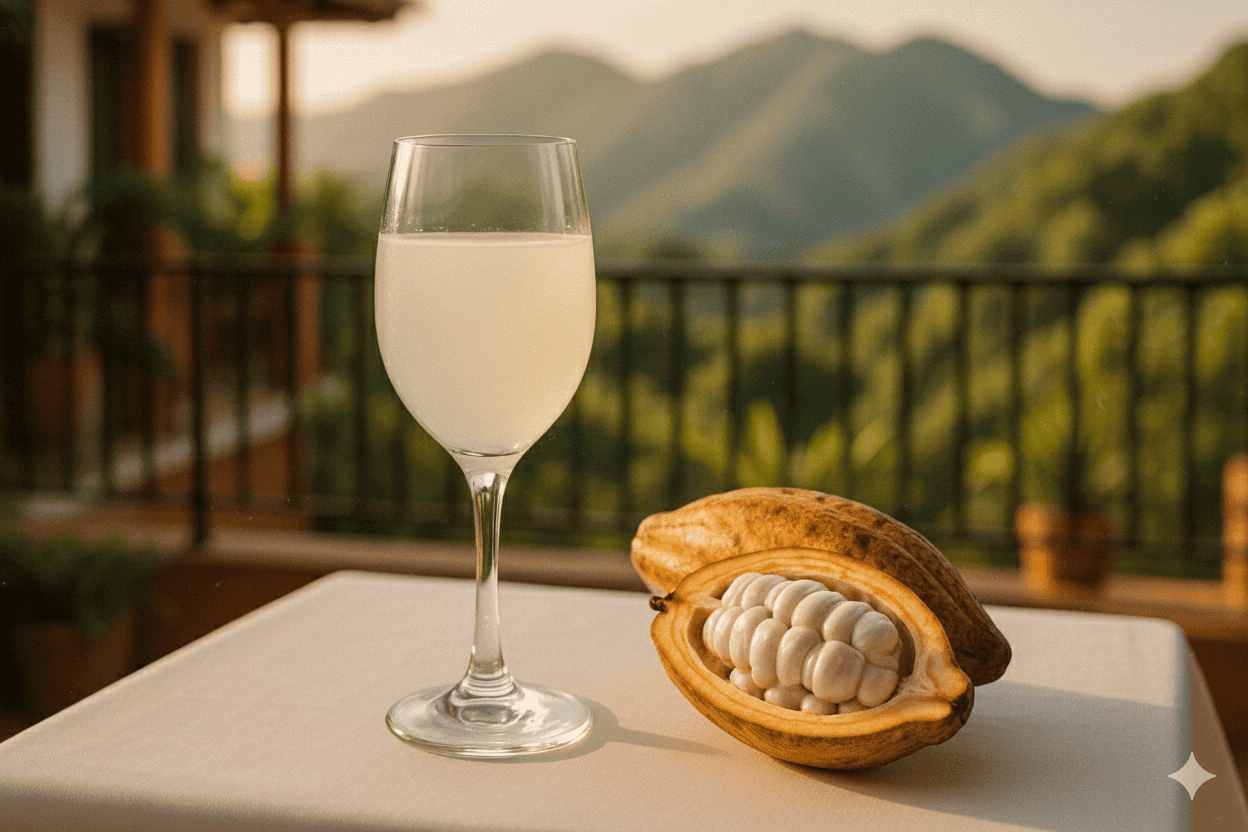
You arrive tired after a long day of travel. At the front desk of a boutique hotel, someone puts a cold glass in your hand. The drink is pale and almost clear, with a faint golden tint, and you take a sip expecting orange or pineapple.
It is neither. It is sweet, then tart, with something floral in the middle. It tastes a little like lychee and a little like green apple. You ask what it is, and the answer is not what you expected: it comes from cacao.
The pulp inside the pod
Cacao grows in large, colorful pods that sprout straight from the tree. Split one open and you find 20 to 40 beans, which are the raw material of chocolate. Each bean is wrapped in a layer of white, sticky, translucent pulp, called cacao mucilage.
For a long time that pulp was left behind when the beans were taken for chocolate. Now some hotels and restaurants press it into juice and serve it, as a food and not as a treatment. In a few places, especially on farms that grow their own cacao, the drink in your hand may have come from pods picked nearby.
"But it doesn't taste like chocolate"
That is the second surprise, and nearly everyone has it. The beans make chocolate. The pulp has a completely different flavor: fruity, refreshing and naturally sweet, with a tart edge of its own. If you expected chocolate, you will not get it. What you get is closer to a nectar, in the neighborhood of lychee, mangosteen or green apple.
That contrast is part of its appeal. A drink with a story, from the same plant as the chocolate on the pillow, but tasting like another fruit entirely.
Why a hotel would serve it
There are a few good reasons, and none of them needs a health claim.
- It is local. It comes from the same pods that give Colombia its cacao.
- It is different. Most guests have never tried it, so the glass starts a conversation.
- It uses the whole fruit. A hotel with its own cacao farm can serve a drink made from the pulp of its own pods.
Where you may meet it
As more hotels and restaurants discover it, you may see it as a welcome drink, as a refreshment at a spa, on a farm-to-table menu or in an experience built around cacao. Ask what it is when you see it. The answer is part of the pleasure.
If you want to know more
Questions are encouraged. Start with what cacao mucilage is, then look at the nutrition facts, where every figure is given with its source. If you run a hotel, a spa or a restaurant and would like to serve it, you can reach us through the where-to-find page.
This content is for educational purposes only and summarizes published sources. It is not medical advice.