Fermenting Cacao: What Happens to the Pulp
After a cacao pod is opened, the beans are fermented in their pulp. What that step is, and what one study measured in the liquid that drains from it.
Fermenting Cacao: What Happens to the Pulp
In most cacao-growing regions the beans are not dried straight out of the pod. They are first fermented while still coated in their white pulp, the cacao mucilage. This article describes that step in general terms and reports the one set of measurements on it that we can source.
The step
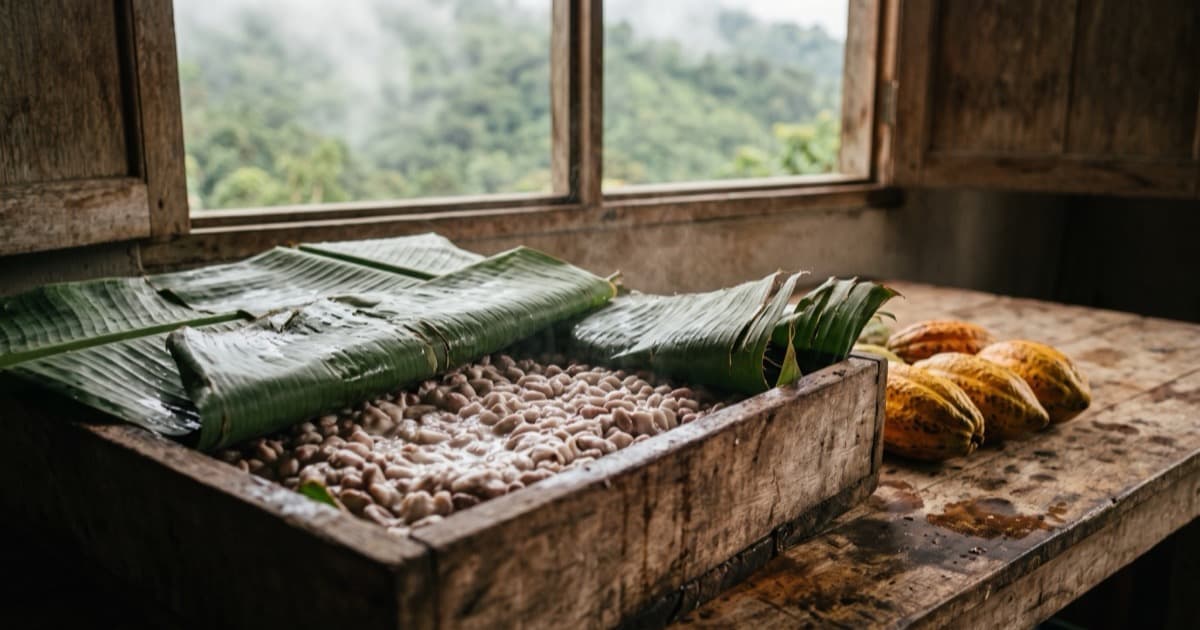
The beans and their pulp are heaped or packed into boxes, often covered with banana leaves, and left for several days. The pulp breaks down and drains away as liquid, and the beans are then dried. Fermentation is a traditional part of making cocoa, and it is generally understood to shape the flavor of the chocolate.
The liquid that drains away
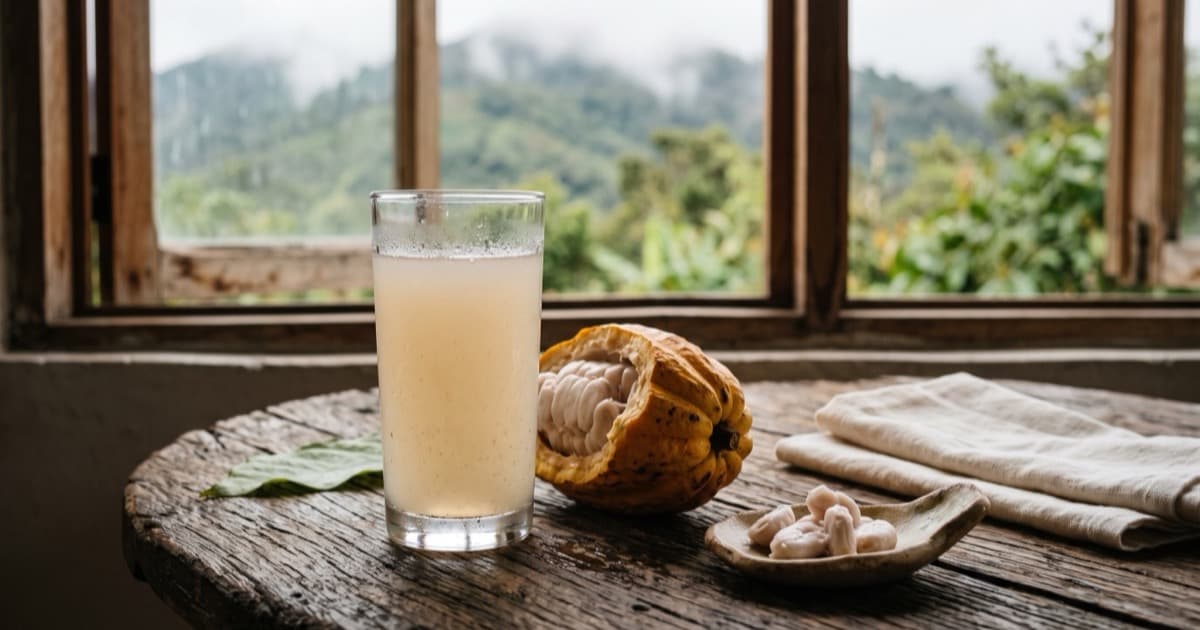
That liquid is mucilage collected from fermenting beans. It is not the same material as the fresh pulp that is pressed into juice. Llerena et al. (2023) collected it from Nacional × Trinitario cocoa in Ecuador (mean of nine samples). In laboratory tests they reported 105.08 mg of total polyphenols per 100 mL, as gallic acid equivalents, and an ABTS radical-scavenging activity of 8.54 µM TE/mL. The CCN-51 cocoa type in the same study gave 72.22 mg per 100 mL.
These are laboratory measurements of one kind of sample. They are not a statement about what drinking it does.
Why we keep these numbers apart from the juice figures
GRAS Notice 947 measured commercial cacao fruit juice, where total polyphenols averaged 61.9 mg per 100 g. A different material and a different method give different numbers, and mixing them would mislead.
What we do not claim
We do not claim that fermentation, the pulp or the juice affects digestion or any other function of the body. No source we use measures that.
Sources
- Llerena, W., et al. (2023). Profile of Bioactive Components of Cocoa (Theobroma cacao L.) By-Products from Ecuador and Evaluation of Their Antioxidant Activity. Foods, 12(13), 2583. https://doi.org/10.3390/foods12132583.
- CABOSSE Naturals NV (notifier). GRAS Notice GRN 947: Cacao pulp, cacao fruit juice, and cacao fruit juice concentrate (FDA response: no questions). U.S. FDA GRAS Notice Inventory, 2020. Notice (PDF) (opens in a new tab).
Learn more
- What the studies report - What published studies and GRAS Notice 947 report
- Regulatory status - How cacao pulp and juice are treated in the United States, the European Union and Brazil
- Safety information - Serving suggestions and cautions
- Nutrition facts and sources - The measured values and where each comes from
This content is for educational purposes only and summarizes published sources. It is not medical advice.