
From By-Product to Food: Using the Pulp Around Cacao Beans
The white pulp around cacao beans has often gone unused. A short look at what it is, how it is now sold as a food ingredient, and which figures we leave out.
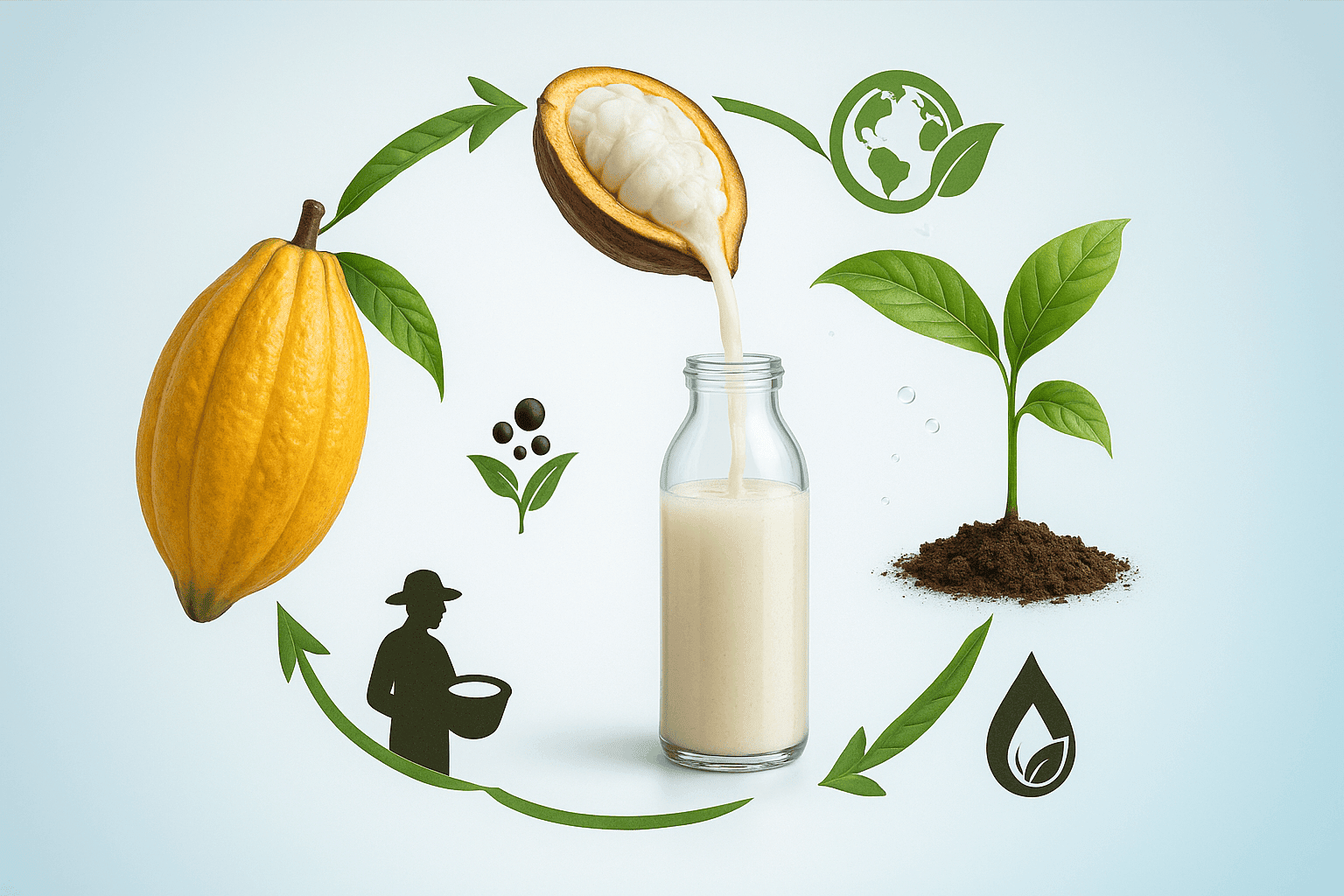
From By-Product to Food: Using the Pulp Around Cacao Beans
What the pulp is
Each cacao pod holds 20 to 40 beans, and each bean is coated in white, translucent pulp, the cacao mucilage. It is naturally sweet and tart, with a taste often described as lychee and citrus, not chocolate. In many cacao-growing regions the pulp has long been left unused when the beans are taken for chocolate, although local communities have always known how it tastes.
Becoming a food ingredient
Today the pulp is sold as pulp, juice or juice concentrate. In the United States, GRAS Notice 947 (submitted in June 2020) covers all three, and the FDA replied that it had no questions about the notifier's conclusion. In the European Union, cacao pulp, pulp juice and concentrated pulp juice were authorised as a traditional food from a third country by Commission Implementing Regulation (EU) 2020/206 of 14 February 2020.
What this can and cannot tell you about farms
Using pulp that would otherwise go unused gives a farm one more product from the same harvest. How much that is worth, how much waste it avoids and what it does to emissions depend on the place and the method. We have not found sources we can stand behind for waste, emissions or income figures, so we do not publish them here. If you see such figures elsewhere, look for the source behind them.
Questions worth asking a supplier
- Which farms does the pulp come from?
- Is the product pulp, juice or juice concentrate, and how is it processed?
- Which analyses exist for the batch you are buying?
Sources
- CABOSSE Naturals NV (notifier). GRAS Notice GRN 947: Cacao pulp, cacao fruit juice, and cacao fruit juice concentrate (FDA response: no questions). U.S. FDA GRAS Notice Inventory, 2020. Notice (PDF) (opens in a new tab).
- Commission Implementing Regulation (EU) 2020/206 of 14 February 2020 authorising the placing on the market of fruit pulp, pulp juice and concentrated pulp juice from Theobroma cacao L. as a traditional food from a third country. Official Journal of the European Union.
Learn more
- What the studies report - What published studies and GRAS Notice 947 report
- Regulatory status - How cacao pulp and juice are treated in the United States, the European Union and Brazil
- Safety information - Serving suggestions and cautions
- Nutrition facts and sources - The measured values and where each comes from
This content is for educational purposes only and summarizes published sources. It is not medical advice.